
Chapter one · The opportunities
The cars that
nearly happened.
Some studies tried to stretch the sports car. Others proposed a new grand tourer altogether. Follow their seating ambitions, the decisions that stopped them and the ideas that survived.
- c. 1952Prototype
Type 530 · a roomier 356
Four-seat objective · two doors
The 356-based Type 530 explored more passenger space through a longer wheelbase, larger doors and a higher rear roof. Porsche identifies it as its first attempt to bring a sports car for four people to the road.
What followedIt remained a prototype; the reviewed factory accounts do not establish a single cancellation reason.
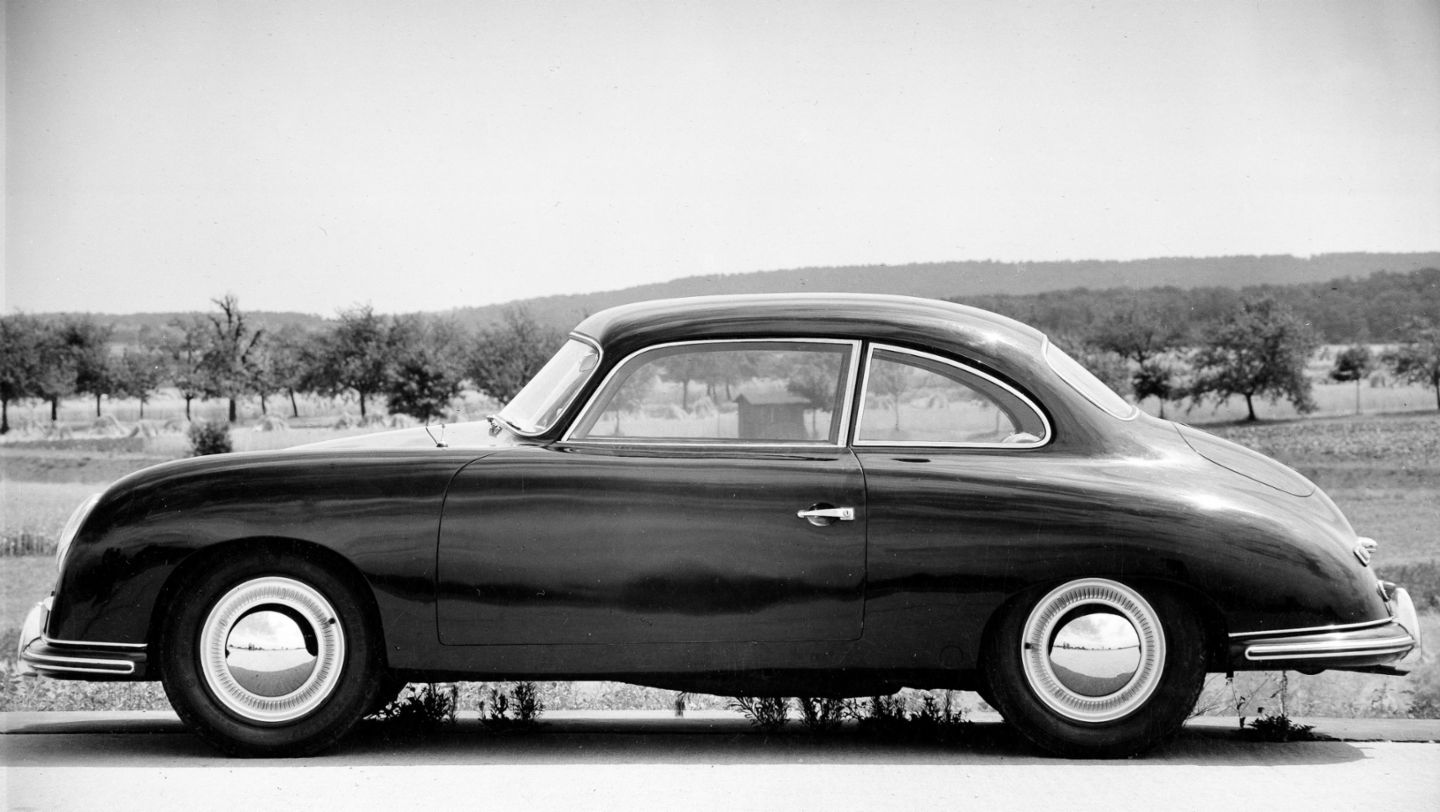
Porsche Type 530, circa 1952 — archive photographPhoto: Porsche AG · Manufacturer press image · editorial reporting terms - Late 1950s–1962 studiesDevelopment studies
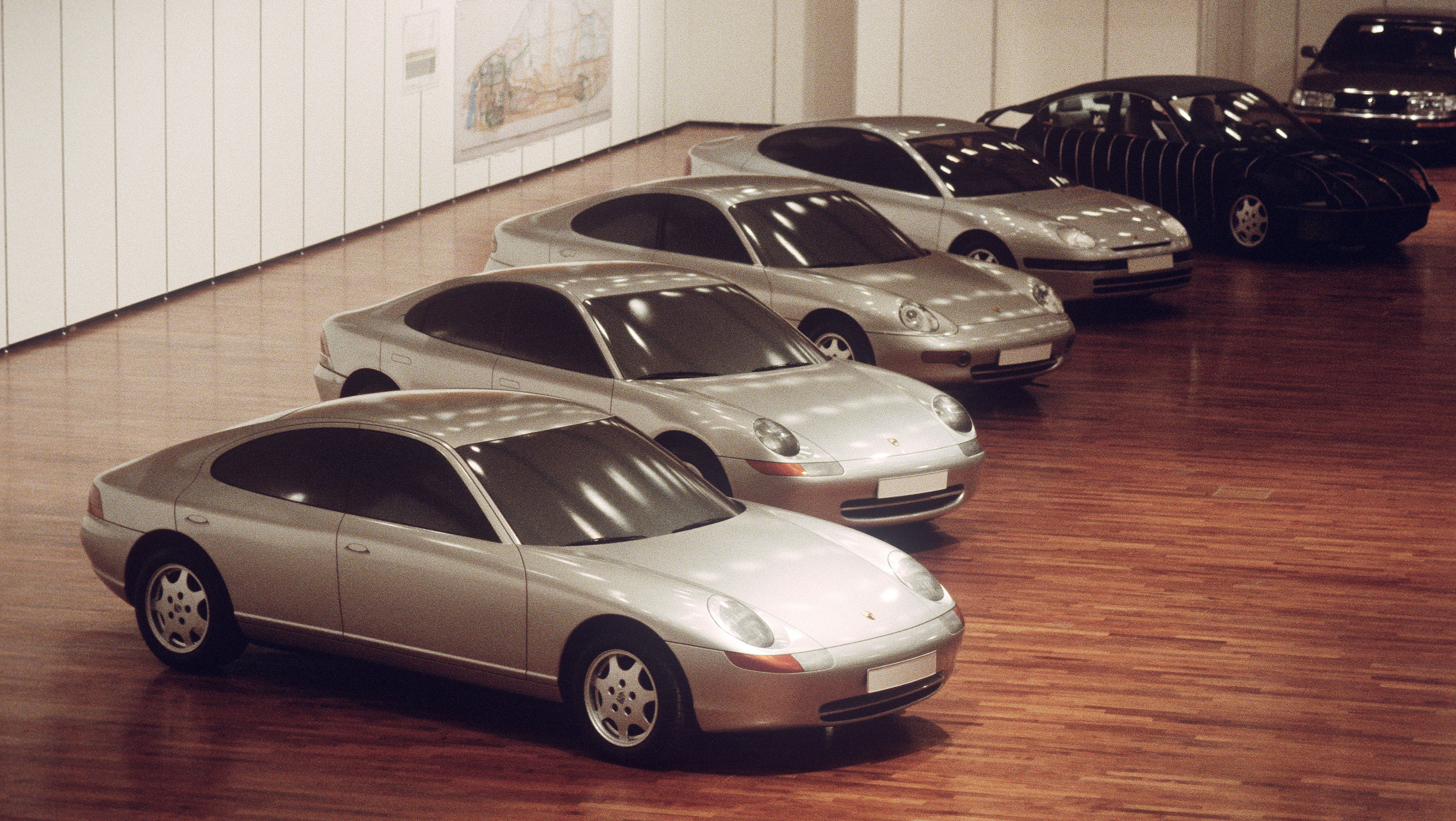
695 / 754 · the four-seat fork before the 911
T9: four full seats · T8: 2+2
Related 695 and 754 studies formed part of the search for a 356 successor. Porsche dates the 754 prototype to 1960. Later T8 and T9 alternatives explored two different priorities: the T8 was a 2+2, while the T9 sought four full seats.
What followedFerry Porsche approved T8 development in 1961. The shorter, fastback 2+2 direction led towards the 901/911; the full-four-seat alternative did not enter production.
Open the prototype record & photographs → - 1969One-off prototype
911 B17 · Pininfarina makes room for four
Four-adult accommodation objective · two doors
Porsche commissioned Pininfarina to explore a roomier 911. The B17 lengthened the cabin and raised the rear roof to accommodate four adults. The surviving car is photographed in its later green finish; its original colour was dark blue.
What followedIt remained a one-off and later entered private ownership. A specific engineering rejection reason is not established here; no direct development continuity to Panamera is claimed.
Open the prototype record & photographs → - Autumn 1969 · often listed as 1970Prototype
911 S Type 915 · a longer Gran Turismo
More rear-passenger legroom · two doors
Porsche built this 911-based Gran Turismo study in autumn 1969, extending its wheelbase by 350 millimetres to increase rear-passenger legroom. Museum photographs and secondary histories often use 1970; this branch follows the factory construction date.
What followedThe Type 915 remained a prototype. The cited factory account does not identify one definitive cancellation reason.
Open the prototype record & photographs → - 19 September 1984One-off prototype
928-4 · a birthday Porsche with more room
Four seats · two doors · extended cabin
Weissach lengthened a 928 S by 25 centimetres, giving rear passengers an additional 20 centimetres of legroom. The one-off four-seater was presented to Ferry Porsche for his birthday on 19 September 1984.
What followedThe birthday car did not enter series production. It demonstrates a roomier 928 proposal rather than an uninterrupted programme leading to the Panamera.
Open the prototype record & photographs → - 1986–1989 programme · museum car dated 1988Abandoned development programme
928 H50 · rear doors, then a structural limit
Four-door proposal · easier rear access
Two four-door 928 layouts with different rear ends were under consideration in 1986. The surviving black H50 has an estate-like rear and is dated 1988 in Porsche archive captions.
What followedPorsche ended the attempt in 1989 after testing failed to establish satisfactory body rigidity.
Open the prototype record & photographs → - 1988–early 1992 programme · archive model dated 1991Cancelled before production
989 · a four-door Porsche halted by economics
Four doors · two full rear seats
The 989 programme began in 1988 with a front-engined V8 sports saloon and two full rear seats. It was a proposed new model line, with a customer launch envisaged for 1995. The existing archive record documents a 1991 prototype.
What followedRising cost and insufficient expected sales undermined the project. Porsche’s 2019 retrospective dates the economic cancellation to early 1992; factory accounts differ on the precise stop date. Panamera later followed a separate programme.
Open the prototype record & photographs →
Chapter two · Into the showroom
Space arrived.
The shape changed.
The first production answer was the Cayenne, rather than a stretched 911. Panamera brought the four-door grand tourer; Macan made the SUV more compact; Taycan gave the idea an electric form.
- 2002Production
Cayenne: the family Porsche takes an SUV shape
Five seats in the original Cayenne; a full rear bench and five-door SUV body.
The first Cayenne made room for the family by changing the shape of a Porsche. The Colorado programme, developed with Volkswagen, added a third product line alongside 911 and Boxster. Porsche describes the brief as a five-seater family car with sports-car dynamics and all-terrain ability. Its Paris premiere in September 2002 turned years of four-seat experiments into a very different production proposition.
What followedThe SUV reached series production and broadened the customer base. It solved the space problem through height and practicality, rather than by lengthening a 911.
Read the sources
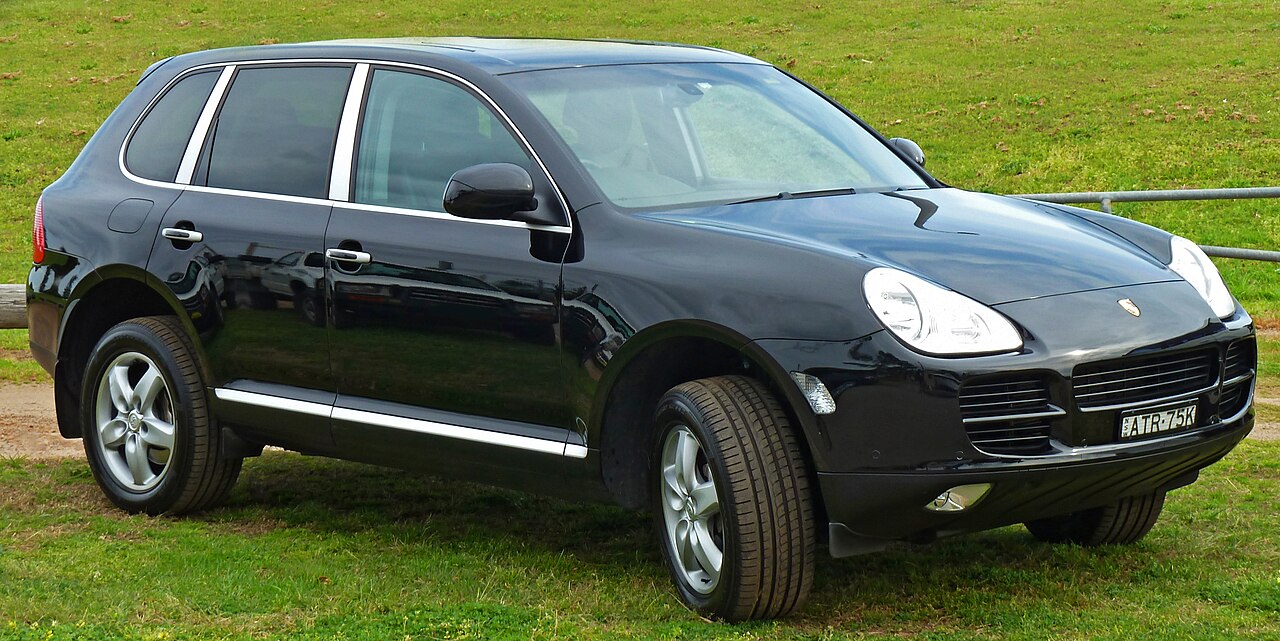
First-generation production Porsche Cayenne S (2003–2006 model range)Photo: OSX · Public domain - 2009Production
Panamera: the low-roof Porsche for four reaches production
Four seats in the original Gran Turismo; later derivatives also offered a 4+1 arrangement.
The Panamera brought the idea back down from an SUV to a four-door Gran Turismo. Its specifications combined driving dynamics, generous passenger space, a fast roofline and a large tailgate. Revealed in Shanghai on 19 April 2009, it came from a new development programme. The earlier 989 was part of Porsche’s four-seat history, rather than an unfinished Panamera awaiting a new badge.
What followedA series-production sports saloon finally joined the range. The separate Sport Turismo concept followed in 2012 and its production derivative arrived in 2017, after the original Panamera launch.
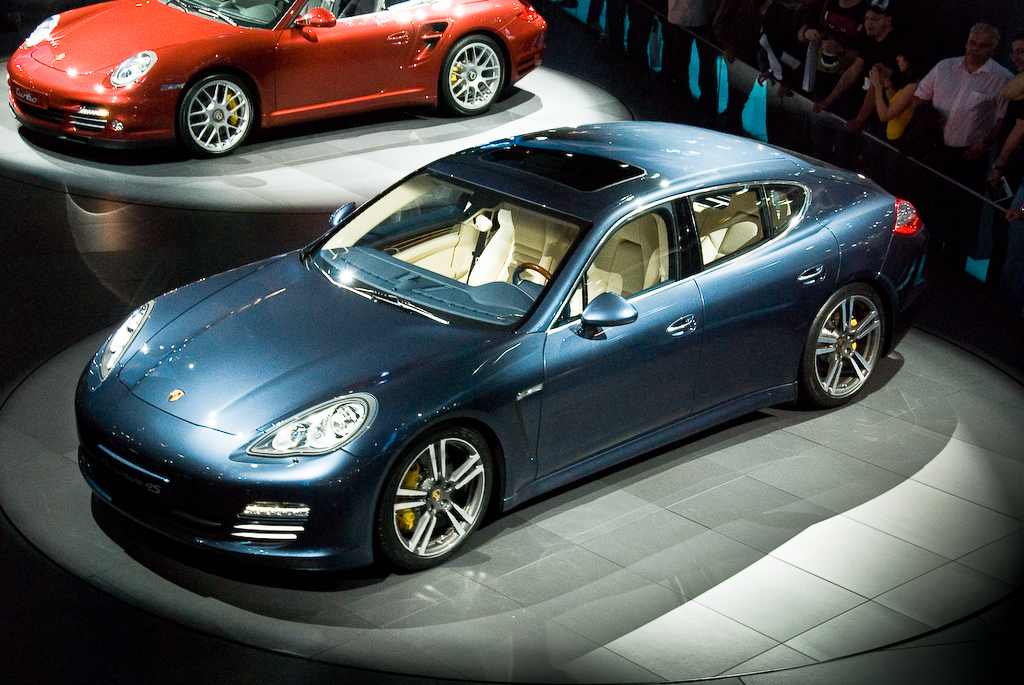
First-generation production Porsche Panamera (970; introduced 2009)Photo: Taco Ekkel · CC BY-SA 2.0 - 2013 premiere · 2014 market launchProduction
Macan: a smaller five-seat SUV
Five seats: two front seats and a three-person rear bench.
The Macan added a more compact SUV to the family-car branch. The Macan S and Turbo premiered at the Los Angeles Auto Show in 2013; the market launch followed in 2014. Its smaller body and sloping roofline offered another interpretation of Porsche proportions, while the five-seat cabin retained the practicality that the early stretched sports-car studies had struggled to provide.
What followedMacan became a separate production family. A second, all-electric generation entered production in 2024. Whether its appearance is closer to the 911’s spirit is a design judgement, not a historical fact.
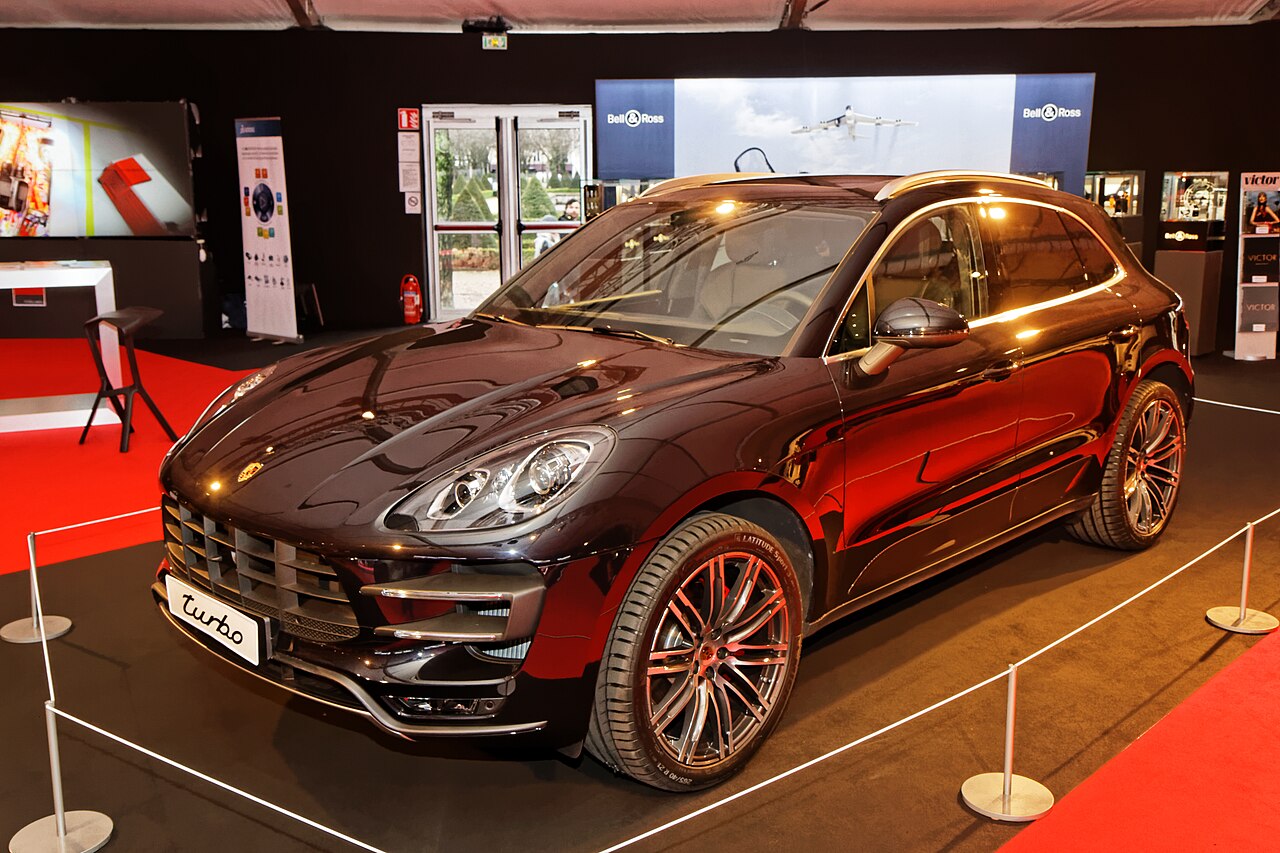
Production Porsche Macan, displayed in 2014Photo: Thesupermat · CC BY-SA 3.0 - 2019Production
Taycan: four-door space in an electric sports saloon
Four seats, with a 4+1 configuration available on many derivatives; specification varies by model and market.
Unveiled on 4 September 2019, the Taycan continued the low-roof, four-door branch with electric drive. Recesses in the battery beneath the rear footwells, described by Porsche as foot garages, helped provide rear-seat comfort without raising the whole body. Its sculpted wings, descending roofline and pronounced shoulders carried familiar design cues into a new layout, following the Mission E concept.
What followedThe production sports saloon was followed by Cross Turismo and Sport Turismo body styles. The chronology runs Cayenne, Panamera, Macan, then Taycan; their packaging solutions differ even when the family-space ambition is shared.
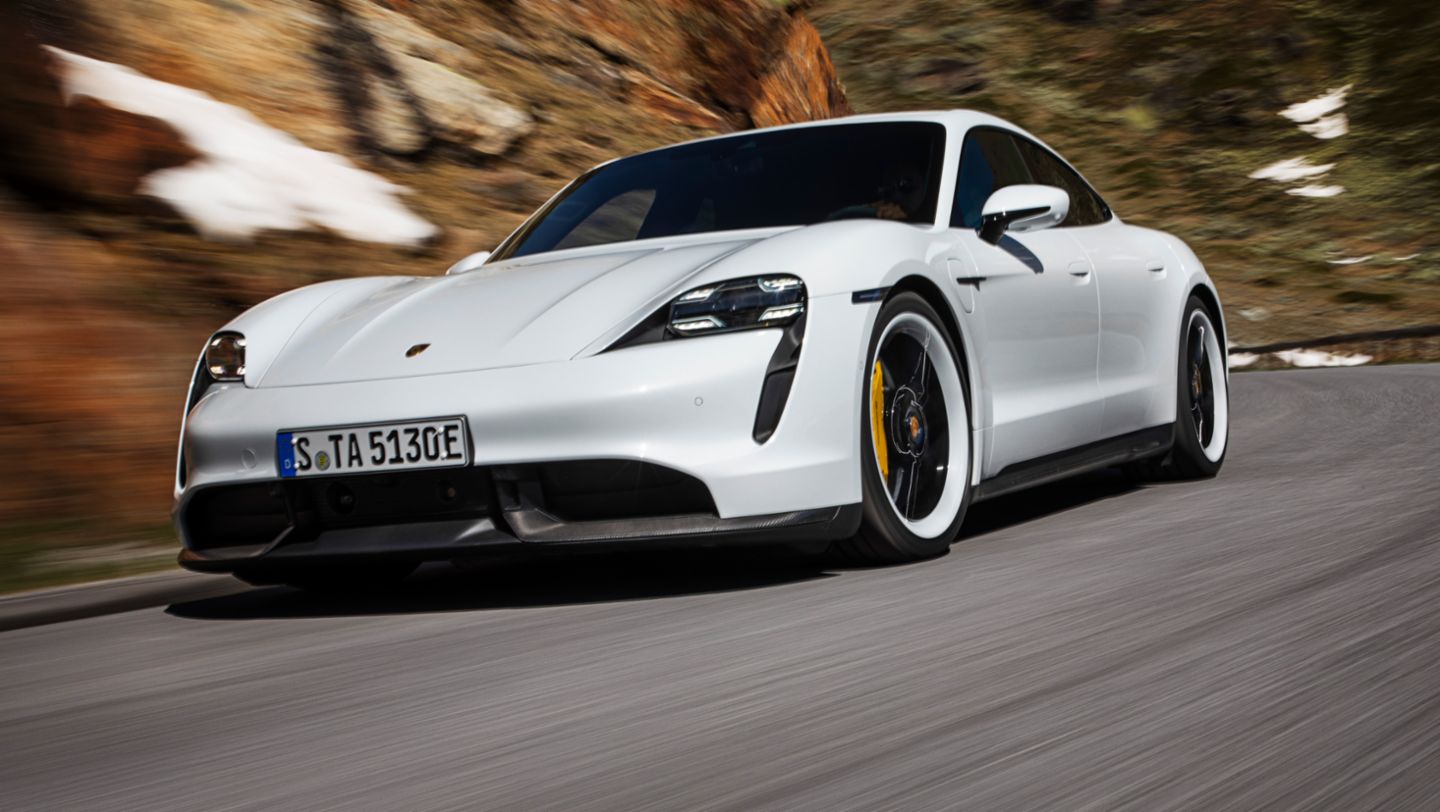
Production Porsche Taycan Turbo S, 2019 — front three-quarter view on a mountain roadPhoto: Porsche AG · Manufacturer press image · editorial reporting terms
Alongside the main road
Other answers
to the same question.
Research commissions and later body-style studies belong in their own context. Their purpose and timing matter as much as their number of seats.
- 1978–1979Government-commissioned research
Type 995 · four seats as a research brief
Four-seat research car · 928-based study
The German Federal Ministry of Research and Technology commissioned Porsche to investigate the sports car of the future. The 928-based Type 995 explored four-seat packaging alongside lightweight construction, aerodynamics, fuel economy and safety.
What followedThis was a research commission, rather than a committed new showroom model. Its ideas belong to the wider history of Porsche engineering for efficient passenger space.
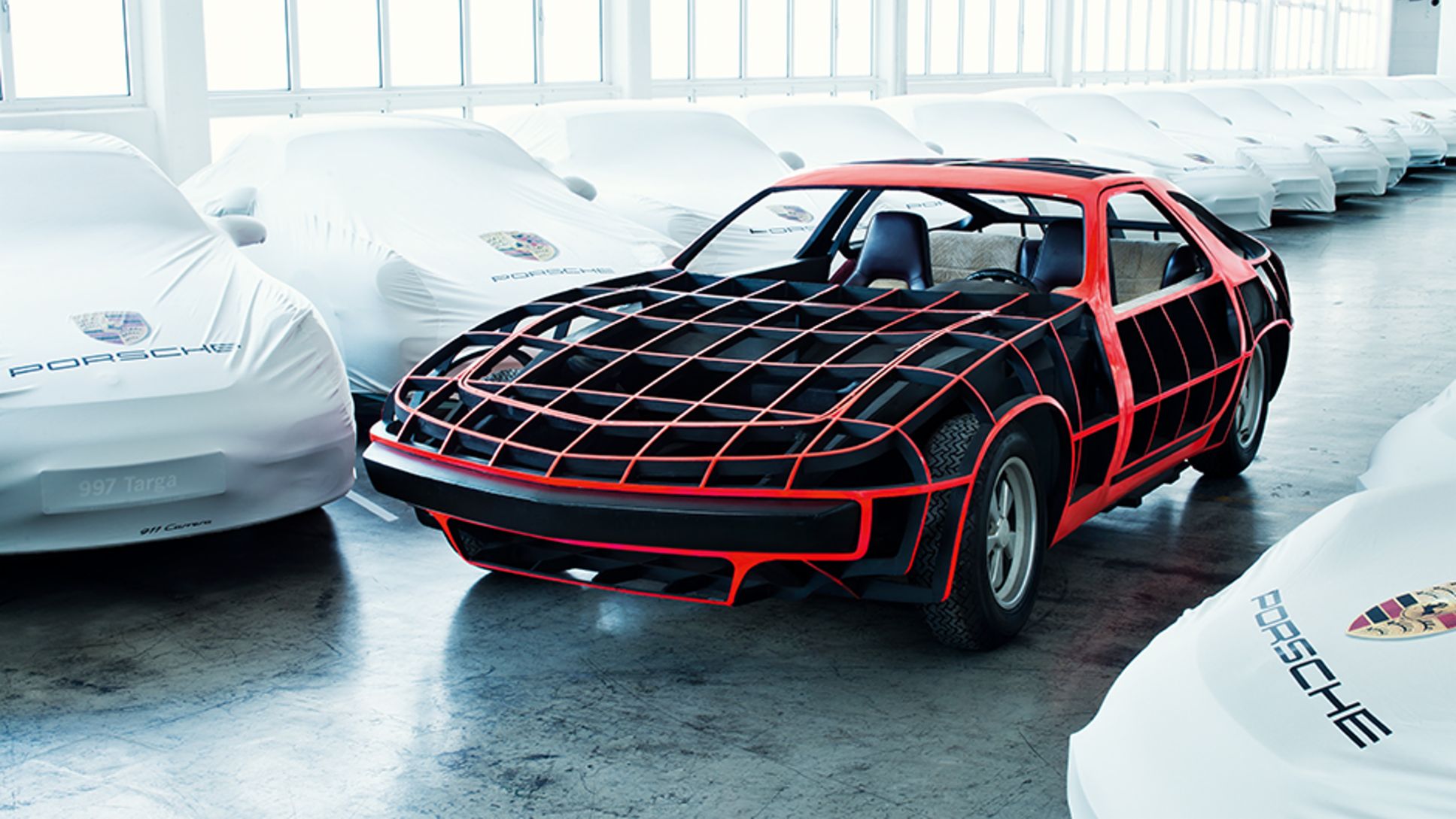
Porsche Type 995 research model (1978–1979), shown with its body structure exposed. Porsche Museum “Top Secret” photograph published in 2014.Photo: Porsche AG · Manufacturer press image · editorial reporting terms - 1994Client-market engineering study
C88 · a separate family-car engineering study
Family-car proposals · including a four-door notchback
Porsche developed the C88 family-car proposal for China in 1994, prioritising affordability, straightforward production, quality and safety. Its intended range included a two-door entry model and a four-door notchback; C stood for China and 88 invoked good luck.
What followedThe government ultimately allowed none of the contenders to build their proposals. The sole C88 survives in the Porsche Museum. This was a separate customer-engineering project; Porsche’s account does not explain the underlying government decision.
Open the prototype record & photographs →
Design interpretation · A question for the viewer
Four seats, but still a Porsche?
The design question runs through this history: how much of the 911’s visual identity can survive a taller roof, four doors and room for adults behind? Porsche’s designers describe the 911 as a source of shared brand cues, including the continuous rear light strip. Recognising those cues is different from preferring the result. Whether Cayenne, Macan, Panamera or Taycan best preserves that spirit remains an aesthetic judgement.
Our starting question is deliberately personal: can a taller body, four doors or an electric grand tourer carry the spirit of a 911? The Macan may appear more resolved to one viewer; another may prefer the Panamera or Taycan. Those are design judgements, separate from the documented engineering and production history.
Compare the prototypes with production Panamera photographs →Research through 22 October 2026; related video references reviewed 23 October 2026. A curated history of documented projects, rather than an exhaustive list of every sketch or commission. Archive photographs and model links follow the current published catalogue; this narrative is a separately sourced editorial history.