Independent Porsche research · Origins—2026

Every Porsche
begins with an idea.

From Ferdinand Porsche’s early engineering to the prototypes of today. Follow the experiments, first examples and unexpected branches that shaped the story.

Ferdinand Porsche’s story begins in 1875. His early engineering predates the company founded in 1931 and the Porsche sports-car marque established in 1948.

Discover the prototypes
Design studies / running prototypes / experimental machinesHistory, with a view of the future

For Porsche owners · Recall alerts

Centre-lock wheel recall · ATA1

Selected 911 and 718 models may be affected. Check the notice and confirm your VIN with Porsche before driving if your car may match.

Sources reviewed 16 November 2026

Read the alert & check your car

Before the badge

Ferdinand Porsche.
The beginning.

Electric vehicles, road and racing cars, tractors and engineering for other manufacturers. Begin with Ferdinand Porsche’s work, then follow the 1948 transition to the sports-car marque led by Ferry Porsche.

Chapter one · The engineering years

Ferdinand Porsche.
The beginning.

Early electric and hybrid vehicles, Mercedes and Auto Union racing projects, client road cars, tractors and utility vehicles. Follow the manufacturer, the date and Ferdinand Porsche’s documented role in each project.

Explore Ferdinand’s vehicle timeline →
The turning point · 8 June 1948

A name becomes
a sports-car marque.

Ferry Porsche and his team’s 356 No. 1 Roadster began a new chapter. Its operating permit marks the birth of Porsche as a sports-car marque; competition and later model families built the reputation that followed.

Follow the 1948 transition →

Agricultural engineering continued in parallel. Explore the early tractor projects, Allgaier production and later Porsche-Diesel successors, with post-1951 designs clearly distinguished from Ferdinand Porsche’s personal work. Follow the tractor branch →

51 sourced entries · 7 engineering branches · Original manufacturers and design attribution retained.

Open the complete engineering timeline →Continue through the early Porsche sports cars →

Featured exploration · Porsche

A Porsche for four.
The long way round.

From a longer 356 to the B17, 928 experiments and cancelled 989: follow Porsche’s search for proper rear-seat space. Cayenne, Panamera, Macan and Taycan eventually answered it with very different shapes.

  1. Late 1950s development

    695 · Before the 911

    The search for a roomier 356 successor informed the 754 and later 901/911. Its prototype record explains the uncertain build date and 1961–62 photograph captions.

  2. 1969

    911 B17 · Pininfarina

    A longer, two-door 911 explored space for four. Originally dark blue, the surviving prototype is photographed in its later green finish.

  3. 1969 · often dated 1970

    911/915 · Porsche

    Porsche’s own Gran Turismo study lengthened the 911 wheelbase by 350 mm for more rear-seat legroom. The record explains the construction date and later C20 label.

  4. 1984

    928-4

    A longer, two-door 928 with room for four, built as Ferry Porsche’s birthday gift.

  5. 1986–1989 programme

    928 H50

    Four-door development explored more space. Body rigidity ultimately stopped the programme.

  6. 1988–1992 programme

    989

    A V8 four-door project that was halted for economic reasons. Explore the 1991 prototype.

  7. 2009

    Panamera

    A later, separate programme finally brought Porsche’s four-door grand tourer into production.

    Read Porsche’s history ↗
  8. 2012 → 2017

    Sport Turismo

    The later hybrid estate study previewed the production Panamera Sport Turismo.

These are distinct projects in Porsche’s four-seat history. The Panamera was a new development programme; Sport Turismo followed its original launch. Sources: Porsche’s four-seat experiments · Panamera development history.

Background photograph: Mission S (2026) · © Porsche AG · Editorial image terms

From the stories · Independent creation

Tuthill GT ONE.
The GT1 spirit, reimagined.

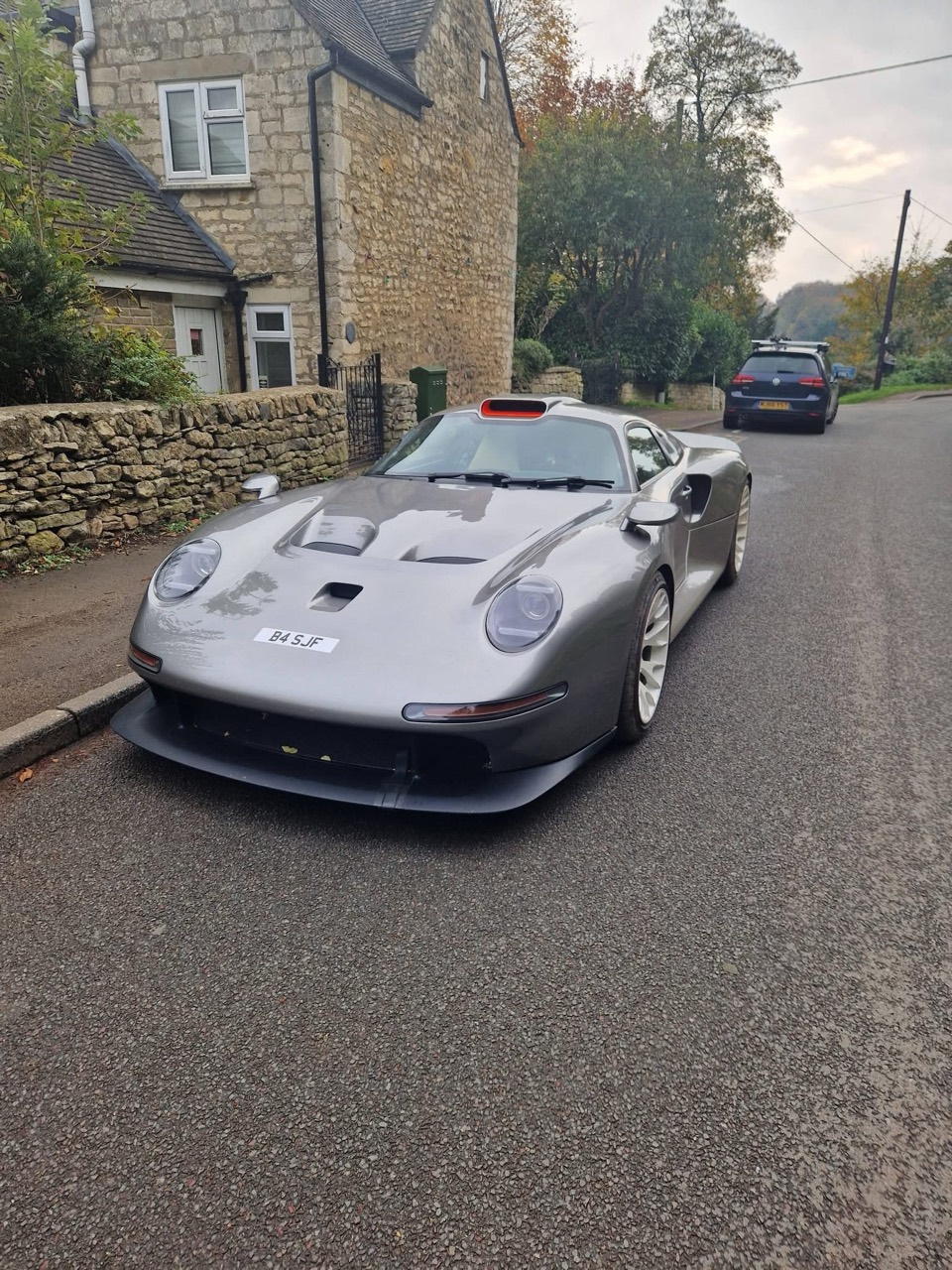
A reader's street photographs open the story of Tuthill's road-first grand tourer and its distinction from Porsche's original 911 GT1.

Read the GT ONE story
Tuthill GT ONE, front three-quarter view in the reader-supplied street photographs.
Reader-supplied photograph · Original photographer unverified. Provenance & rights

From the stories · 911 factory one-off · 2022

Sally Special.
A character for the road.

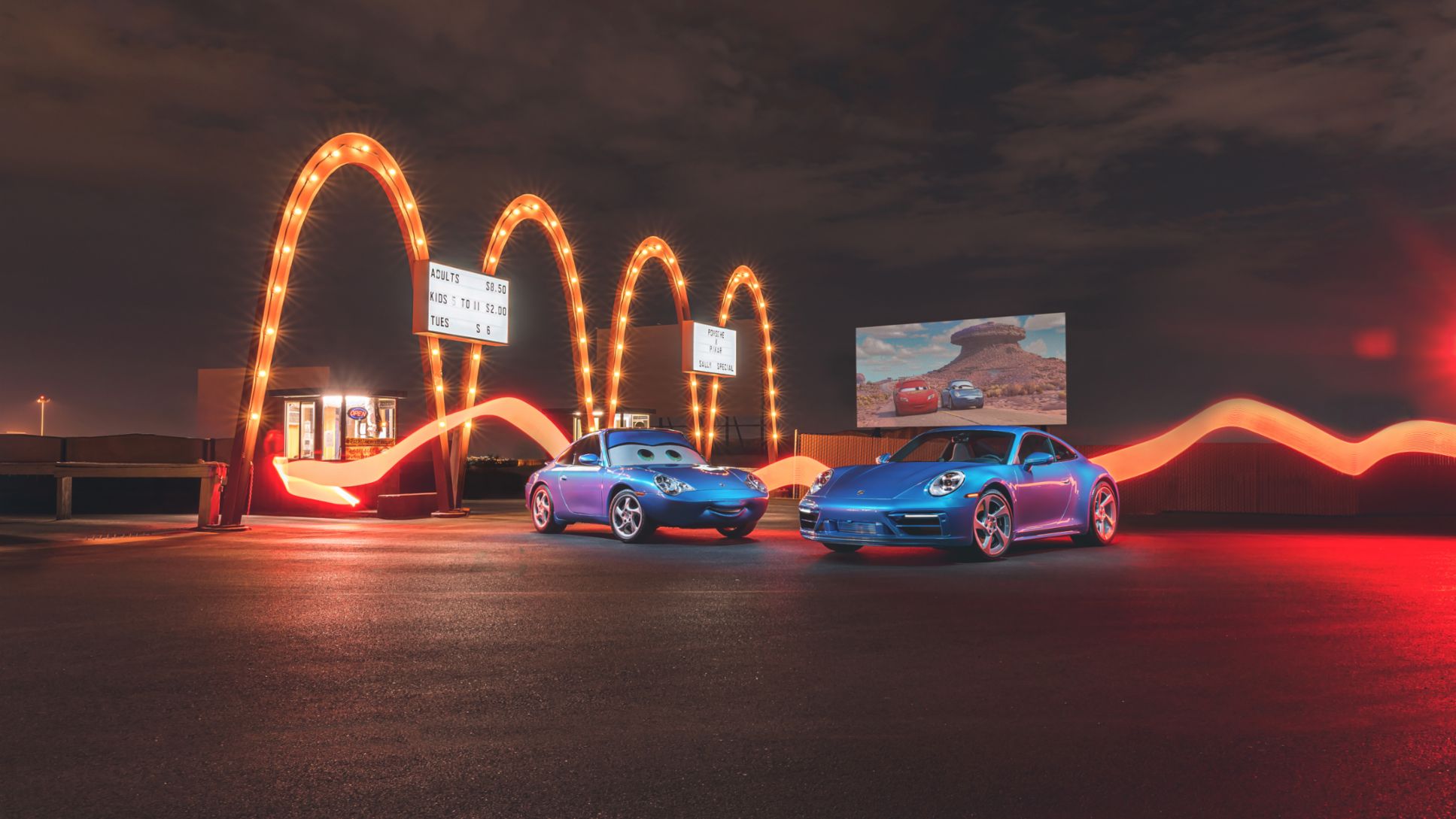
Two real Porsches, one film character and a US$3.6 million charity sale. Discover the blue 911 behind the story.

Read the Sally Special story
The blue, road-going 2022 Sally Special (right) beside the separate Sally Carrera character vehicle, in an official Porsche promotional photograph.
The blue, road-going 2022 Sally Special (right) beside the separate Sally Carrera character vehicle, in an official Porsche promotional photograph.Photo: Porsche Cars North America / Porsche AG · Manufacturer press photograph · restricted editorial use

From the stories · Independent coachbuilt conversion

dp Cargo.
A Porsche with more to carry.

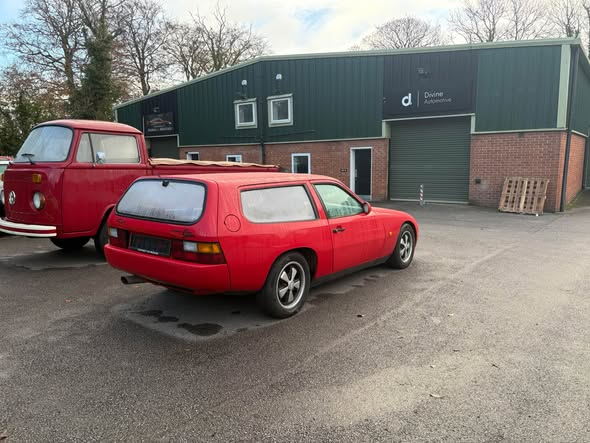
Discover the 924 and 944 shooting brakes built by dp motorsport, their different donors and their place outside the factory range.

Read the dp Cargo story
Red Porsche shooting brake, likely a 924-based dp Cargo. Contributor-supplied photograph, used with permission; photographer not identified. Reproduced without local alterations.
Red Porsche shooting brake, likely a 924-based dp Cargo. Contributor-supplied photograph, used with permission; photographer not identified. Reproduced without local alterations.Credit: Archive contributor (photographer not identified) · Reproduced with permission; other rights reserved

Independent Brazilian design · Porsche influence

Dacon 828.
The Porsche connection.

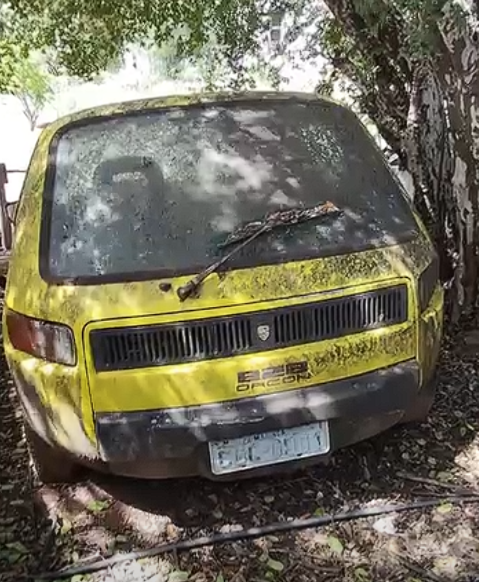
Dacon's Brazilian city car echoes the Porsche 928. Its commercial and visual connections belong to Porsche's wider history, while the car itself remains an independent Dacon design.

Read the Dacon story
Yellow Dacon 828 survivor, rear view, in a contributor-supplied video frame. The individual chassis and filming date are unverified.
Yellow Dacon 828 survivor, rear view, in a contributor-supplied video frame. The individual chassis and filming date are unverified.Photo: Tv Pardau (video account); photographer unidentified · Contributor-confirmed publication permission; other rights reserved

The Racing Families · 1963–2027

The Racing Families.
Follow the evolution.

From the 904 and twelve-cylinder 917 to turbocharged GTs, Group C, GT1, RS Spyder, 919 Hybrid, 963 and electric competition.

Explore The Racing Families

Six eras, beginning with the 904–917 collection of 1963–1971. History reviewed through November 2026; 2027 developments are an announced outlook.

Prototypes

Follow the ideas.
Explore the eras.

From pre-war engineering and the first Porsche sports cars to electric visions. Every published model has photographs, its documented history and original sources.

An independent record

More than 30 years
of Porsche passion.

I’ve been passionate about Porsche cars for more than 30 years. I created PorscheProto to share that fascination: the ideas that reached the road, the prototypes that nearly did, and the stories behind them.

PorscheProto follows Porsche’s prototypes, design studies, experimental vehicles and important first examples from the beginnings to today. Each record explains what happened next: a production descendant, a research purpose or a documented reason the idea went no further.

This is a privately run enthusiast website with no affiliation to Porsche AG or any Porsche company. It is not authorised by or endorsed by them. Porsche names and trademarks identify the subjects of the research.

Reading the prototype records

Pre-company engineering, Porsche-branded prototypes and production reference cars are identified separately. Early context does not imply that a Porsche-badged car or the Porsche company existed in 1898.

Power and performance figures are attributed manufacturer claims, design targets or documented results, as labelled. A static show car is not treated as a tested production vehicle. “Not published” means the cited source does not establish that specification.

Photographer credits and reuse terms accompany each picture. Images are resized for display; card thumbnails may show a crop. Open a photograph for the complete view and its original source.

The collection is edited as new evidence becomes available.
One archive · Three designs

Choose your view.

Choose a look. Your place in the archive, model selection and filters stay with you.

Preview photo: Smnt · CC BY-SA 4.0

Preview photo: Renato746 · CC BY-SA 4.0

Remembered only in this browser. Links can include your design choice. No account is needed.